
free website development for small businesses · By Webfreezee · · 7 min read
How Much Does a Small Business Website Cost in the UK? (2026 Guide)
What a small business website really costs in the UK in 2026 — DIY builders, freelancers, agencies and monthly plans compared, plus the hidden costs to budget for.
Short answer: most UK small businesses spend somewhere between £0 and £10,000 upfront, plus £10 to £150 a month to keep the site online, secure and up to date. Where you land depends on who builds it: you (with a DIY builder), a freelancer, an agency, or a monthly website service.
The headline price is only half the story, though. The costs that catch people out are usually the ones that come after launch. This guide breaks down what each option really costs, what you get for the money, and how to pick the right one for your business.
Quick comparison: UK website costs at a glance
| Option | Typical upfront cost | Typical ongoing cost | Best for |
|---|---|---|---|
| DIY website builder | £0 | ~£10–£40/month + your time | Very tight budgets, simple sites, people who enjoy tinkering |
| Freelance web designer | ~£500–£3,000 | ~£10–£60/month hosting, plus changes billed as extra | Businesses that want a custom site and know a good freelancer |
| Web design agency | ~£3,000–£10,000+ | ~£50–£200/month for hosting and maintenance | Larger projects, complex features, bigger budgets |
| Monthly website service | £0–£500 | ~£20–£100/month, everything included | Businesses that want a professional site without a big upfront bill |
These are typical ranges for a small business site of around 5–10 pages. E-commerce, booking systems and custom features cost more.
1. DIY website builders
Platforms like Wix, Squarespace and Shopify let you build a site yourself from a template.
What it costs: a monthly or annual subscription, usually somewhere between £10 and £40 a month for a business plan, plus a domain name. E-commerce plans cost more, and some platforms take a transaction fee on sales.
What you get: templates, drag-and-drop editing, hosting and SSL included.
The real cost: your time. A decent small business site takes most people 20–40 hours to plan, write, design and fix, and then it needs looking after. Templates also mean your site can look a lot like your competitors'. If your time is worth £30 an hour, a "free" DIY site can cost £600–£1,200 in hours before it goes live.
Choose this if: you have more time than budget, your needs are simple, and you're comfortable doing it yourself.
2. Hiring a freelance web designer
What it costs: usually a one-off fee between £500 and £3,000 for a small business site, depending on experience, the number of pages and whether copywriting is included.
What you get: a more personal service and a site designed around your business, often on WordPress.
Watch out for:
- Handover risk. Once the project ends, you may be left managing a CMS you don't understand, or waiting for a busy freelancer to make small changes.
- Extra charges for changes. Many freelancers bill updates by the hour.
- Hosting and updates. WordPress sites need regular plugin and security updates. If nobody does them, the site can break or get hacked.
Choose this if: you have a trusted freelancer, a clear brief and budget set aside for ongoing changes.
3. Hiring a web design agency
What it costs: typically £3,000–£10,000 or more for a small business website. Complex e-commerce or bespoke functionality can go well beyond that. Most agencies also offer hosting and maintenance plans, often £50–£200 a month.
What you get: a team (designer, developer, often a copywriter and project manager), a structured process and usually a polished result.
Watch out for:
- Paying before you see anything. Most agencies ask for a 30–50% deposit upfront, with the balance due at launch.
- Long timelines. Six to twelve weeks is common.
- Lock-in. Some agencies build on their own systems, which makes it hard to move later.
Choose this if: you need a larger or more complex site and have the budget for it.
4. Monthly website services (website as a subscription)
A newer option for small businesses: instead of paying a large build fee, you pay a monthly amount that covers design, hosting, security, support and updates.
What it costs: typically £0–£500 upfront and around £20–£100 a month, depending on what's included.
What you get: a professionally built site without the big upfront bill, plus someone looking after it afterwards.
Watch out for:
- Minimum contract terms. Some services lock you in for 12–24 months. Check the cancellation terms.
- Template sites sold as "custom". Ask to see real examples.
- Who owns the content. Make sure your text, images and domain stay yours.
Choose this if: you want a professional website, predictable monthly costs and ongoing help, without a four-figure bill on day one.
The hidden costs of a small business website
Whichever route you choose, budget for these:
- Domain name: usually around £10–£20 a year for a .co.uk or .com.
- Business email: Google Workspace or Microsoft 365 charge per user, per month.
- Hosting and SSL: often included with builders and monthly services, charged separately elsewhere.
- Maintenance and security updates: essential for WordPress sites. Neglect is the most common reason small business sites break.
- Content changes: new prices, new photos, a new service. If every change means emailing someone and paying by the hour, costs add up quickly.
- Copywriting and photography: good words and real photos make a bigger difference than most design choices.
- Plugins, apps and add-ons: booking systems, live chat, e-commerce and premium plugins often carry their own monthly fees.
- VAT: check whether quoted prices include VAT.
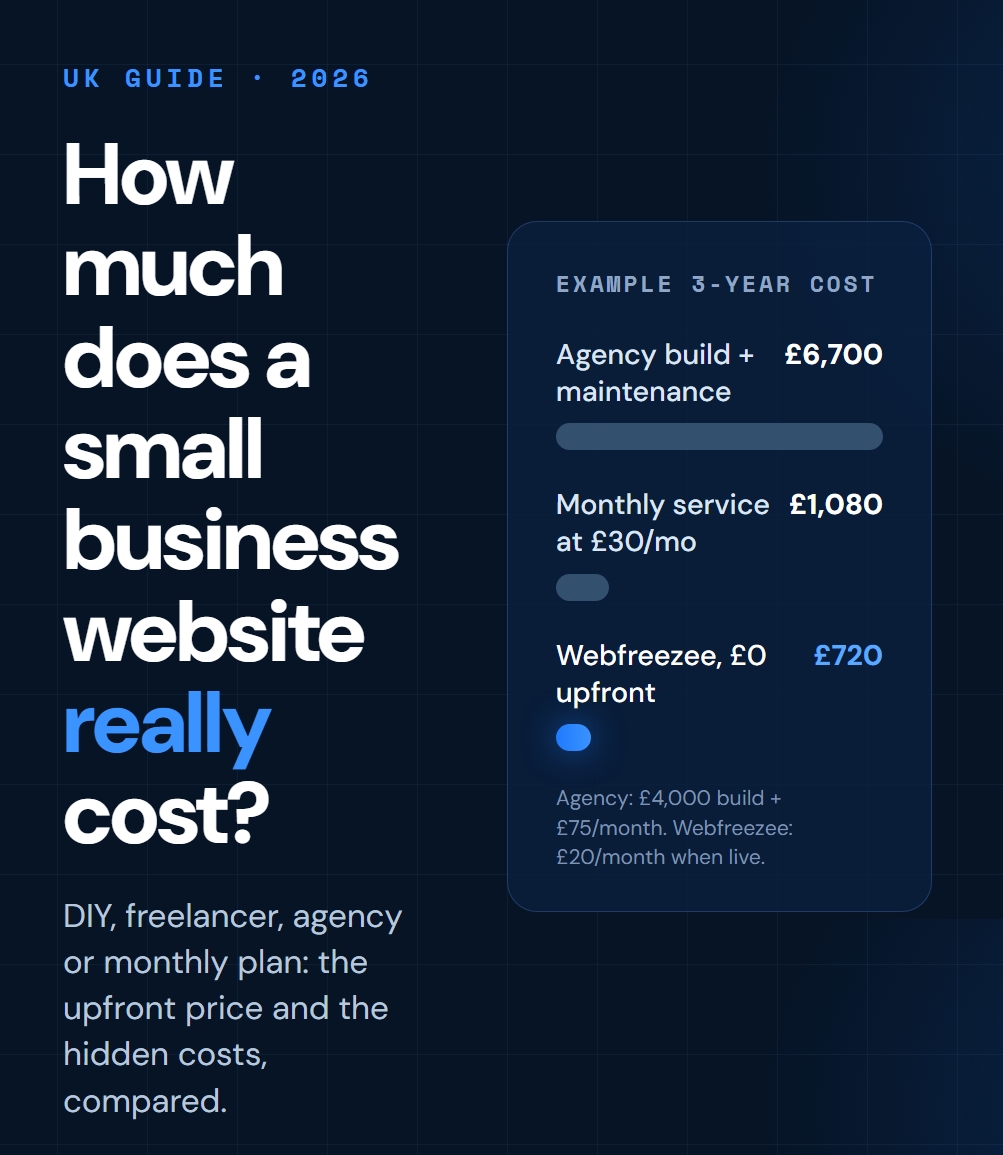
A useful way to compare options: work out the total cost over three years, not just the launch price. A £4,000 agency site with a £75/month maintenance plan costs about £6,700 over three years. A monthly service at £30 a month costs about £1,080 over the same period.
What should a small business website include?
Whatever you pay, a good small business website in 2026 should have:
- A mobile-friendly design. Most visitors arrive on a phone.
- Fast loading. Slow sites lose visitors and rank lower.
- Clear contact options: phone, email, a contact form and your location if you serve a local area.
- Search engine basics: unique page titles and descriptions, a sitemap, and pages for each main service.
- SSL (the padlock): standard, and needed for trust and for Google.
- Something you can update: a way to change everyday content without breaking the site.
- Trust signals: reviews, examples of your work, and who's behind the business.
How Webfreezee prices websites
We built Webfreezee because the usual model asks small businesses to take all the risk: pay a deposit, wait, and hope the finished site is what you pictured.
We do it the other way round:
- £0 to design and build. We design your website from scratch, not from a template, before you commit to anything.
- Review it first. You follow the build on a private progress page and request changes before paying a penny.
- £20/month only when you go live. That covers hosting, SSL, maintenance, your own Portal, a safe visual Editor for everyday changes, analytics, an enquiries inbox and human support.
- Add features only when you need them: AI Chat (+£20/month), Customer Hub (+£30/month) or E-commerce (+£40/month).
- No long contract. Cancel anytime (see our terms).
Over three years, the core website works out at £720 in total, with nothing upfront.
Want to see what you'd get after launch? Explore the demo Portal, or tell us about your business and we'll start designing.
Frequently asked questions
How much should a small business pay for a website in the UK?
For a typical 5–10 page small business site, expect roughly £500–£3,000 with a freelancer or £3,000–£10,000+ with an agency, plus ongoing hosting and maintenance. Monthly website services start from around £20 a month with little or nothing upfront.
Is it cheaper to build a website yourself?
In cash terms, yes: a DIY builder costs around £10–£40 a month. But it takes most people 20–40 hours to build a decent site, plus ongoing time to maintain it, and template sites can look generic.
What are the ongoing costs of a website?
Budget for a domain name (about £10–£20 a year), hosting and SSL, business email, maintenance and security updates, and content changes. Depending on how the site was built, that can be anywhere from about £10 to £200 a month.
Do I own my website if I pay monthly?
It depends on the provider. Always check who owns the domain, your content and your images, and what happens if you cancel. Read the terms before you sign up.
How long does it take to build a small business website?
A DIY site can take a few weekends. Freelancers and agencies typically take between two and twelve weeks. With Webfreezee, you'll usually see a first design within 24 hours of sending your brief.
Is a £20/month website any good?
It can be, as long as the monthly fee includes a properly designed site, hosting, security, updates and real support, with no long contract. Ask to see real examples and check exactly what's included before signing up.